Reducing Calories Through Substitutions
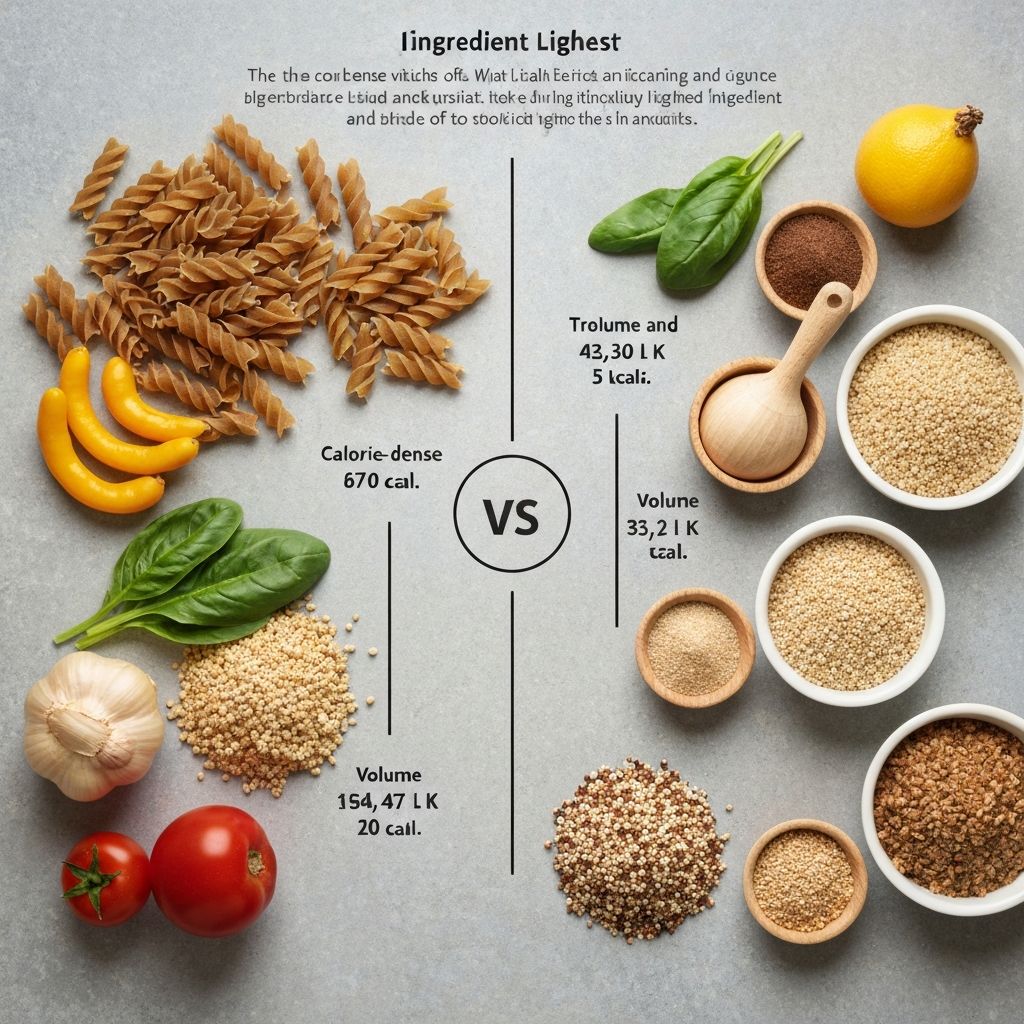
An educational exploration of how ingredient substitutions relate to calorie management and nutritional balance.
Understanding Calorie Density
Calories are units of energy found in food. Different ingredients contain varying amounts of calories based on their macronutrient composition. Fats provide approximately 9 calories per gram, while carbohydrates and proteins each provide approximately 4 calories per gram. This fundamental principle explains why some ingredients are more calorie-dense than others.
Foods high in fat naturally contain more calories per unit of weight. For example, oils and butter are nearly pure fat, making them very calorie-dense. Conversely, foods high in water content, such as vegetables and fruits, tend to be less calorie-dense because water provides volume without calories.
The Principle of Substitution
Ingredient substitution involves replacing one food item with another that serves a similar culinary purpose but has different nutritional characteristics. This practice is based on the observation that many recipes can accommodate alternative ingredients without substantially altering the final dish.
The educational value of understanding substitutions lies in recognizing how different ingredients contribute to overall calorie intake. By comparing similar ingredients with different calorie contents, individuals can learn about the relationship between food choices and energy consumption.
Common Substitution Categories
Dairy Products
Dairy products vary significantly in calorie content based on their fat content. Full-fat dairy products contain more calories than their reduced-fat or fat-free counterparts. For example, whole milk contains more calories than skimmed milk due to its higher fat content. Greek yogurt can serve as a substitute for sour cream in many recipes, potentially reducing calorie content while maintaining a similar texture.
Cooking Fats
All fats and oils are calorie-dense, but the amount used in cooking can be modified. Using cooking spray instead of pouring oil can reduce the total amount of fat used. While the oil itself remains calorie-dense, using less of it naturally results in fewer total calories. Alternatively, some recipes allow for partial substitution of oil with alternatives like applesauce or mashed banana in baking.
Grains and Starches
Refined grains and whole grains have similar calorie contents, but they differ in other nutritional aspects. Some people explore alternatives to traditional grain-based foods, such as using cauliflower rice instead of white rice or zucchini noodles instead of pasta. These vegetable-based alternatives typically contain fewer calories due to their higher water content and lower carbohydrate density.
Proteins
Different protein sources contain varying amounts of fat, which affects their total calorie content. Lean proteins such as chicken breast, white fish, and legumes generally contain fewer calories than fattier options like ribeye steak or dark meat poultry with skin. This difference is primarily due to the fat content rather than the protein itself.
Practical Examples
To illustrate these principles, consider the following examples:
A traditional pasta dish with cream sauce might use heavy cream, butter, and full-fat cheese. By substituting these with alternatives like milk thickened with a small amount of flour, reduced butter, and part-skim cheese, the calorie content can be reduced while maintaining a creamy texture.
In baking, recipes often call for significant amounts of oil or butter. Some baked goods can be made with partial substitutions of applesauce, mashed banana, or Greek yogurt, which add moisture and bulk with fewer calories than pure fat.
Sandwich preparation offers numerous substitution opportunities. Using lettuce leaves instead of bread eliminates the calories from the bread. Choosing lean meats, reducing cheese portions, and selecting mustard instead of mayonnaise can all contribute to a lower-calorie sandwich.
Considerations and Context
While understanding calorie reduction through substitutions is educational, it is important to recognize several contextual factors:
- Calories are only one aspect of nutrition; vitamins, minerals, fiber, and other nutrients also matter
- Individual calorie needs vary based on age, sex, body size, activity level, and other factors
- Reducing calories is not universally beneficial or appropriate for all individuals
- Taste preferences and cultural food traditions are important considerations
- Some fats provide essential fatty acids and aid in the absorption of fat-soluble vitamins
This article presents educational information about nutritional principles. It does not constitute individual advice. Anyone considering changes to their eating patterns should consult with qualified nutrition professionals who can provide guidance based on their specific circumstances.
Educational Context
This article provides general information about calorie content and ingredient substitutions for educational purposes only. It does not constitute dietary advice or recommendations. Individual nutritional needs vary significantly based on numerous factors. Consult qualified professionals before making changes to your eating patterns.